IndustryWeek (Alpern) - A new report suggests Michigan’s advanced manufacturing jobs are not just surviving the recession, but actually thriving and account for two-thirds of the state’s industrial workforce. Manufacturers that use advanced processes and produce advanced products generally pay higher wages and employ higher rates of productivity than other subsectors of manufacturing, according to the report prepared by the Anderson Economic Group for the University Research Corridor.
Citing data from 2007, which was the most recent available, job losses in advanced manufacturing throughout Michigan was not nearly as widespread as those seen in other areas of manufacturing over the last 10 years.
Though many companies in advanced manufacturing were hit during the recession, there were several notable areas of growth. According to the report, employment for medical equipment and supply manufacturing grew 10.8% to 8,434 people, and jobs in navigational, measuring, medical and control equipment grew 18% to 11,257 as of 2007. Overall, Michigan had 381,000 advanced manufacturing jobs at 11,000 businesses, accounting for 10.3% of state workers and 16.2% of payroll, according to the 2007 data.
Showing posts with label Workforce. Show all posts
Showing posts with label Workforce. Show all posts
Sunday, August 22, 2010
Saturday, August 14, 2010
The 2010 National Engineering Survey
 Consulting-Specifying Engineer conducted a comprehensive survey on a large sample of its total circulation of more than 40,000 engineers...The National Engineering Survey presents a comprehensive look at the role of engineers in today’s building-construction environment. Apparent in the results is that engineers face many challenges, some of which are traditional, while others represent conflicts with traditional engineering practice.
On the one hand, they have to satisfy continually changing codes and standards and the traditional mandate that systems have to be well designed and accurately specified. Just doing this amount of work is becoming harder due to shrinking budgets and tightening schedules, especially in the current economic circumstances. To look more deeply into issues beyond initial construction, i.e., lifecycle issues, which are not codified, seems to be beyond the scope of their contractual requirements.
Tuesday, July 27, 2010
Industries Find Surging Profits in Deeper Cuts
 New York Times (Schwartz) - Many companies are focusing on cost-cutting to keep profits growing, but the benefits are mostly going to shareholders instead of the broader economy, as management conserves cash rather than bolstering hiring and production. Harley, for example, has announced plans to cut 1,400 to 1,600 more jobs by the end of next year. That is on top of 2,000 job cuts last year — more than a fifth of its work force.
In some ways, the ability to raise profits in the face of declining sales is a triumph of productivity that makes the United States more globally competitive. The problem is that companies are not investing those earnings, instead letting cash pile up to levels not reached in nearly half a century. “As long as corporations are reinvesting, the economy can grow,” said Ethan Harris, chief economist at Bank of America Merrill Lynch. “But if they’re taking those profits and saving them, rather than buying new equipment, it hurts overall growth. The longer this goes on, the more you worry about income being diverted to a sector that’s not spending.”
“There’s no question that there is an income shift going on in the economy,” Mr. Harris added. “Companies are squeezing their labor costs to build profits.”
House Approves Economic Development Legislation
IndustryWeek (Cable) - 'SECTORS' Act would provide grants for public-private partnerships to address training needs. The U.S. House of Representatives on July 19 approved bipartisan legislation that aims to help industries meet their skilled workforce needs by connecting public- and private-sector stakeholders in various industry clusters.
The “Strengthening Employment Clusters to Organize Regional Success” (“SECTORS”) Act, H.R. 1855, would set up a grant program through the Department of Labor to provide funding for partnerships between businesses, unions, educators and the public workforce system to coordinate training activities in “high-demand and emerging industries,” according to the House Education and Labor Committee. Eligible partnerships could receive up to $2.5 million in grants for the first three years and up to an additional $1.5 million thereafter.
The “Strengthening Employment Clusters to Organize Regional Success” (“SECTORS”) Act, H.R. 1855, would set up a grant program through the Department of Labor to provide funding for partnerships between businesses, unions, educators and the public workforce system to coordinate training activities in “high-demand and emerging industries,” according to the House Education and Labor Committee. Eligible partnerships could receive up to $2.5 million in grants for the first three years and up to an additional $1.5 million thereafter.
Sunday, July 18, 2010
Andy Grove is Right about Manufacturing
 National Center for Manufacturing Sciences (Jarman) - Recently Andy Grove wrote a great article about the danger of marginalizing the domestic manufacturing sector- How to Make an American Job Before It's Too Late: Andy Grove. Grove, who co-founded Intel in 1968, has first hand experience on how difficult it is for companies to grow and create jobs.
"The underlying problem isn’t simply lower Asian costs. It’s our own misplaced faith in the power of startups to create U.S. jobs. Americans love the idea of the guys in the garage inventing something that changes the world. New York Times columnist Thomas L. Friedman recently encapsulated this view in a piece called “Start-Ups, Not Bailouts.” His argument: Let tired old companies that do commodity manufacturing die if they have to. If Washington really wants to create jobs, he wrote, it should back startups."Andy is right and Thomas Friedman is wrong. Do the math! Only about 2 in 10 start-ups succeed and most fail to employ more than five people in the first five years. A 20% business success rate only creates hundreds of jobs at best. We would need tens of thousands of successful start-ups to make a substantial impact on our economy...
Design Engineering Salary and Career Insight
 Design News (Greenfield) - To say 2009 was a difficult year for most economically and in terms of employment would be considered a "sky is blue" statement. That is, it would be difficult to make a more obvious statement. Despite the bleak realities encountered across the board in the past couple of years, results from Design News' most recent survey of subscribers clearly indicates that the scene for design engineers is improving. Granted, responses to the survey also indicated that plenty of work-related pain remains. The good news is that the bright spots were just as readily apparent.
Despite the not-insignificant number of engineers unhappy with their current job situation, only 10 percent said they are actively seeking other employment...The most telling statistic for any product, service or job lies in how many of those currently involved with it would recommend it to a close friend or relative. When it comes to design engineering, 70 percent of respondents said they would recommend their field of work to a son, daughter or friend. Click here for a link to the full survey. Click here to view more related charts and graphs.
NGA Report Indicates Collaboration is Key for Readying the Workforce for a Global Economy
 National Governors Association - A new report released today by the National Governors Association Center for Best Practices (NGA Center), A Sharper Focus on Technical Workers: How to Educate and Train for a Global Economy, provides a model for how states can work collaboratively with industry, community colleges and each other to provide opportunities for workers to build their skills and ensure America's future economic security and prosperity. The report outlines actions governors can take to shape a new future for job training in a way that will nurture the largest and fastest-growing industries, including:
Saturday, July 10, 2010
Firm harnessing Detroit's expertise in manufacturing
 Detroit News (Trop) - Local workers who once welded engine racks for the auto industry may soon be stamping sheet metal for Boeing airplane roofs or NASA rocket platforms. That's the plan under way at former auto supplier W Industries, which is capitalizing on the dormant automotive base here to buy cheap facilities, win manufacturing contracts and employ precision workers..."Our goal is to refurbish and retool former automotive facilities and retain talent with the latest technology," said chief executive Edward Walker. Hat Tip: AMD
Sunday, July 4, 2010
Department of Energy Seeks Input on Wind Energy Workforce Development Roadmap
U.S. Department of Energy - DOE has issued a Request For Information (RFI) to gain public input on the development of a Wind Energy Workforce Roadmap, which will provide details on the current workforce landscape in the wind industry as well as future steps necessary to train and develop a green workforce for the sector. The purpose of the Roadmap is to establish the policy objectives and overall direction that workforce development efforts throughout the wind industry should assume as it moves forward. This RFI provides leaders from academia, industry, and government with the opportunity to provide insight and guidance to DOE as the nation ramps up its wind energy production. A draft Roadmap document has been developed, and the public may provide comments on the initial draft or may provide alternative or additional viewpoints.
This RFI does not constitute a request for specific project proposals. The information being sought under this RFI is intended to assist DOE and the wind industry in maximizing ongoing efforts to spark interest and skills development in the growing wind industry. The information collected may be used for internal DOE planning and decision-making to align future activities under the Wind and Water Power Program with the Administration's goals for increased use of renewable energy and domestic job creation.Comments must be provided by no later than July 30, 2010.
This RFI does not constitute a request for specific project proposals. The information being sought under this RFI is intended to assist DOE and the wind industry in maximizing ongoing efforts to spark interest and skills development in the growing wind industry. The information collected may be used for internal DOE planning and decision-making to align future activities under the Wind and Water Power Program with the Administration's goals for increased use of renewable energy and domestic job creation.Comments must be provided by no later than July 30, 2010.
Saturday, June 26, 2010
DOL Competency Model Clearinghouse
 Department of Labor - Competency models that identify the foundation and technical competency required for satisfactory on-the-job performance are a resource for program planners and curriculum developers. The models serve as curriculum maps ensuring that programs equip students with the knowledge and skills needed to secure a job and advance along a career path. Competency models assist curriculum developers to:
- Develop competency-based training objectives and outcomes
- Tailor courses to specific student populations or industry needs
- Evaluate and update existing program content
Pentagon ahead of schedule on in-sourcing, beefing up acquisition workforce
Washington Post (Censer) - The Pentagon has hired 3,400 people since the fall of 2009 and replaced about 1,400 contractors with government workers as part of an aggressive effort to strengthen its oversight of acquisitions. The department is running well ahead of schedule in its plans to add 10,000 new employees and convert another 10,000 private jobs to the public sector by 2015, said Shay Assad, the Defense Department's top acquisition policy official...Contractor advocacy groups have pushed back against the shift from contractors to government employees, but Assad said the Pentagon is going about the process fairly.
Factories Grapple With How Fast to Ramp Up
 Wall Street Journal (Maher) - reports manufacturers are stuck trying to find the balance of increasing production without overextending, a costly mistake that can have repercussions. Mike Arnold, an executive VP of Timken Co. said "Everyone wants to ramp up... but nobody wants to overcapitalize." His company laid off 20% of its workforce over the course of the recession, and now companies are asking if they will be able to deliver enough goods if demand doubled. Bringing capacity online too quickly can hurt prices, yet by waiting too long leads to shortages, which put workers on overtime and forcing companies to rush to fill retailer's needs. The Journal notes in April, US manufacturers were operating at 70.1% of potential capacity, up from the low of 65.1% in June, but still below the average of 80.8%. Hat Tip: NAM
Saturday, June 19, 2010
Study: U.S. at Risk of Losing Global Lead in Medical Innovation
 The Council for American Medical Innovation - White House Coordination, Federal Policy Agenda Needed to Reverse Downward Trend; Near-Term Opportunity Exists to Create Jobs, Address National Deficit and Cure Life-Threatening Disease. CAMI - launched in 2009, has brought together leaders in research, medicine, public health, academia, education, labor, and business, who are working in partnership to encourage public policies that advance medical innovation and the development of lifesaving treatments, enhance job growth, and promote patient access. Download the complete report and appendix here
Based on the core findings of the Battelle study, as well as the thousands of conversations and idea-sharing sessions held across the country, CAMI today outlined the following near-term priorities to help drive this targeted framework:
0
comments

 Labels:
Association,
Collaboration,
Education,
Medical,
Policy,
Study,
Technology,
Workforce
 Labels:
Association,
Collaboration,
Education,
Medical,
Policy,
Study,
Technology,
Workforce
Saturday, June 12, 2010
A Manufacturing Agenda for America
 American Automotive Policy Council - America's auto manufacturers — Chrysler Group LLC, Ford Motor Company and General Motors Company — are committed to investing and keeping jobs here in the United States and delivering the most advanced and green technologies to U.S. consumers.
We will strengthen U.S. manufacturing by building the next generation of environmentally-friendly products consumers expect, and investing in plants, research, and people here in America.
We need a “Manufacturing Driven” policy agenda to:
- Shape regulatory, tax and fiscal policies to encourage manufacturing in the United States;
- Create public/private partnerships that speed the development of advanced technologies, similar to programs that other governments have in place that benefit our competitors, such as domestic battery production;
- Target federal manufacturing and jobs support programs to states with the highest rates of unemployment;
- Dedicate more funds to loans and grants for projects that directly create jobs for researching and manufacturing sustainable, advanced technology vehicles...
0
comments
Labels:
Alternative Energy,
Automotive,
Collaboration,
Finance,
Grants,
Green,
Incentives,
Investment,
Policy,
Sustainability,
Taxes,
Technology,
Trade,
Workforce
Labels:
Alternative Energy,
Automotive,
Collaboration,
Finance,
Grants,
Green,
Incentives,
Investment,
Policy,
Sustainability,
Taxes,
Technology,
Trade,
Workforce
Friday, June 11, 2010
What if there's no fix for high unemployment?
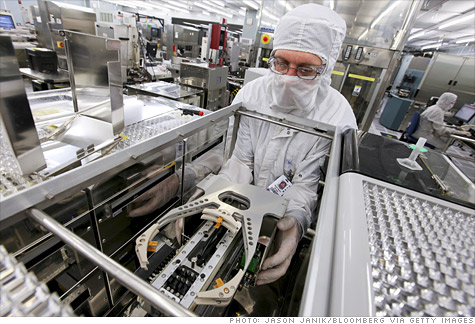 Fortune (Ford) - There seems to be little doubt that unemployment is going to remain stubbornly high -- quite possibly for years to come. There's also mounting evidence that a good part of that unemployment is really structural in nature: The skills and capabilities of many experienced workers are simply no longer demanded by the market.
In manufacturing and in many clerical and administrative occupations, computerization and automation have left many formerly middle-class workers with few viable career options. Is it possible that we're creating a future in which jobs are going to be harder and harder to create?
Majority of Company CEO's Planning to Hire
 Barometer Surveys – For the first time since the second quarter of 2007, a majority (51 percent) of CEOs of the nation's leading private companies surveyed for PricewaterhouseCoopers' Private Company Trendsetter Barometer were optimistic about the U.S. economy’s prospects over the next 12 months (up six points from the previous quarter and up 32 points from the same quarter in 2009). A majority (53 percent) of Trendsetter executives plan additions to their workforce over the next 12 months, up six points from the prior quarter’s 47 percent and up 22 points from 1Q09’s 31 percent.
What's New in Workforce Investment?
Department of Labor - The Economic Development Administration (EDA) has announced it is soliciting applications for the FY 2010 "Mapping Regional Innovation Clusters Project" competition. EDA is allocating $1,500,000 in FY 2010, anticipating that the mapping regional innovation clusters award or awards made under this competitive solicitation will involve a multi-year project period, with total funding for this research effort reaching up to $1,000,000 for each year. Funding beyond the first year for the grant award shall be contingent on satisfactory performance, availability of appropriations, and EDA priorities. Via: Innovation Daily
Sunday, June 6, 2010
Robots Can Create Jobs, Too
 Bloomberg BuisnessWeek (Jeff Burnstein, President, Robotics Industries Association) - With unemployment at about 14 percent or higher in Michigan, it's not surprising some workers are afraid of robots capable of working seven days a week, 24 hours a day with great accuracy and reliability, capable of performing many tasks better than people.
That fear, so prevalent in the early days of robotics, today is misplaced. What should really give workers pause is when their companies won't use robots and other automated technologies to become stronger global competitors. U.S. technology and business innovators recognize that robots in factories have the potential to save and create more jobs than they eliminate. Robots help companies turn out higher-quality and lower-cost goods to compete with those made in China, Mexico, India, or other low-wage nations. They remove people from dangerous and boring jobs they shouldn't have been doing in the first place, and put them in higher-skilled, higher-paying positions.
VW Wants To Hire 'Industrial Athlete'
Manufacturing.Net (Poovey, AP) - Volkswagen is requiring production workers hired for its new U.S. assembly plant to go through a fitness program on top of the usual job training, aiming to forge an "industrial athlete" who can lift, grip, bend and push without flagging. VW formally opened its training academy at the $1 billion plant site Friday. But dozens of workers hired ahead of a projected production start early next year have already been building their bodies there before they start building cars.
Volkswagen Chattanooga spokesman Scott Wilson said the workouts are aimed at better product quality when the German automaker starts building a mid-sized sedan at the plant, which is expected to create about 2,000 jobs. He said time in the classroom, hands-on training and fitness training are all "focused on getting each and every one of us, no matter what our job is at the plant, prepared to show up and perform at the highest level of professional excellence."
Volkswagen Chattanooga spokesman Scott Wilson said the workouts are aimed at better product quality when the German automaker starts building a mid-sized sedan at the plant, which is expected to create about 2,000 jobs. He said time in the classroom, hands-on training and fitness training are all "focused on getting each and every one of us, no matter what our job is at the plant, prepared to show up and perform at the highest level of professional excellence."
Wage Increases Could Sound "Death Knell" For China's Production System
 Noting that Foxconn and Honda offered their employees in China "big wage increases" to "dampen labor unrest," the Christian Science Monitor (Ford) says the hikes also "signal huge changes in the way 'the workshop of the world' is feeding global consumers." According to experts, rising incomes "are sounding the death knell for the production system that has fueled much of China's phenomenal economic growth for the past three decades." Rather than "relying on huge numbers of workers making miserable wages at unskilled jobs, and churning out cheap exports, the government is keen on moving up the value chain." Simultaneously, rising salaries "are laying the foundation for another seismic shift in China's development model, as the government seeks to base economic growth more on domestic consumption and less on exports." Hat Tip: NAM
Subscribe to:
Posts (Atom)


 Posts

