IndustryWeek (Alpern) - A new report suggests Michigan’s advanced manufacturing jobs are not just surviving the recession, but actually thriving and account for two-thirds of the state’s industrial workforce. Manufacturers that use advanced processes and produce advanced products generally pay higher wages and employ higher rates of productivity than other subsectors of manufacturing, according to the report prepared by the Anderson Economic Group for the University Research Corridor.
Citing data from 2007, which was the most recent available, job losses in advanced manufacturing throughout Michigan was not nearly as widespread as those seen in other areas of manufacturing over the last 10 years.
Though many companies in advanced manufacturing were hit during the recession, there were several notable areas of growth. According to the report, employment for medical equipment and supply manufacturing grew 10.8% to 8,434 people, and jobs in navigational, measuring, medical and control equipment grew 18% to 11,257 as of 2007. Overall, Michigan had 381,000 advanced manufacturing jobs at 11,000 businesses, accounting for 10.3% of state workers and 16.2% of payroll, according to the 2007 data.
Showing posts with label Mfg Metrics. Show all posts
Showing posts with label Mfg Metrics. Show all posts
Sunday, August 22, 2010
Saturday, August 14, 2010
June manufacturing technology consumption up 35.8%
 AMT - June U.S. manufacturing technology consumption totaled $241.47 million, according to AMT - The Association For Manufacturing Technology and AMTDA, the American Machine Tool Distributors’ Association. This total, as reported by companies participating in the USMTC program, was up 35.8% from May and up 71.1% from the total of $141.12 million reported for June 2009. With a year-to-date total of $1,207.60 million, 2010 is up 56.1% compared with 2009.
Sunday, August 8, 2010
U.S. economic outlook continues to stabilize, uncertainty about the global economy lingers among U.S. industrial manufacturers
 PricewaterhouseCoopers - Manufacturing Barometer reports that optimism about the U.S. economy is down slightly from last quarter, but still shows strength with almost half (45 percent) of U.S. industrial manufacturers optimistic about the next 12 months, according to the Q2 2010 report. Only 12 percent of industrial manufacturers are pessimistic about the U.S. economy’s prospects over the next 12 months, while 43 percent are uncertain. Of those marketing abroad, 38 percent are optimistic about the world economy over the next 12 months, down 15 points from last quarter. More respondents are uncertain, at 46 percent, but only 16 percent are pessimistic.
For the second quarter in a row, legislative/regulatory pressures ranked highest among perceived barriers to growth over the next 12 months, with 63 percent of panelists naming it as a concern (down 10 points from last quarter). Taxation policies rose 14 points this quarter, cited by 57 percent. The number concerned about lack of demand dropped 13 points in Q2 2010 but remains a potential barrier according to 50 percent of respondents, followed by the monetary exchange rate, cited by 40 percent of panelists. On the positive side, decreasing profitability dropped 12 points this quarter, with only 35 percent citing it as a possible barrier to growth.
Sunday, August 1, 2010
From Recession to Recovery: Analyzing America’s Return to Growth
 Innovation Daily (DeVol, Milken Institute) - Tangible signs of U.S. economic turnaround are evident, and the recovery is already under way, according to this economic analysis from Ross DeVol, Executive Director of Economic Research.
From Recession to Recovery: Analyzing America's Return to Growth calls for modest but sustainable growth in GDP, consumer spending and jobs. According to DeVol, strong recovery in business investment in equipment, more robust exports, a more upbeat consumer and continued low interest rates will fuel the growing recovery.
Key points in the forecast:
Tuesday, July 27, 2010
Supply Chain Risks, Backshoring Rise; Small Manufacturers Add Jobs, Large Manufacturers Cut
 Mfg.com (AJ) - has conducted the latest MFGWatch survey of North American manufacturers (select this link for the complete survey results and a downloadable PDF). The survey focused on their activities in the second quarter of 2010, and on their expectations for the third quarter. Highlights of this most recent survey include a significant rise in the number of large North American manufacturers that have seen significant supply chain risks in the second quarter and a rise in the number of buyer manufacturers that are planning to investigate backshoring of production back from low-cost countries. Also of note, while larger manufacturers in the region have indicated they’ve shed jobs since April small supplier manufacturers say they’ve added jobs during the same period.
Vital Signs of the Med Tech Industry
 ThomasNet News (Leybovich) - While most sectors of the economy experienced a slowdown or decline during the recession, research shows that the medical technology industry fared better than most and continues to be a major contributor to U.S. economic health. In fact, the industry has emerged as one of the strongest drivers of the rebound. While challenges remain for the med tech field, technological and business advances paint a promising future.
The downturn took a sizable toll on many segments of the United States economy, with lingering effects that can be seen in the still-unstable employment market and sluggish revenue growth for a wide range of businesses. However, the medical technology industry has weathered the recession surprisingly well and will be able to continue its successes by developing new technologies to meet the nation's health needs.
Industries Find Surging Profits in Deeper Cuts
 New York Times (Schwartz) - Many companies are focusing on cost-cutting to keep profits growing, but the benefits are mostly going to shareholders instead of the broader economy, as management conserves cash rather than bolstering hiring and production. Harley, for example, has announced plans to cut 1,400 to 1,600 more jobs by the end of next year. That is on top of 2,000 job cuts last year — more than a fifth of its work force.
In some ways, the ability to raise profits in the face of declining sales is a triumph of productivity that makes the United States more globally competitive. The problem is that companies are not investing those earnings, instead letting cash pile up to levels not reached in nearly half a century. “As long as corporations are reinvesting, the economy can grow,” said Ethan Harris, chief economist at Bank of America Merrill Lynch. “But if they’re taking those profits and saving them, rather than buying new equipment, it hurts overall growth. The longer this goes on, the more you worry about income being diverted to a sector that’s not spending.”
“There’s no question that there is an income shift going on in the economy,” Mr. Harris added. “Companies are squeezing their labor costs to build profits.”
Sunday, July 18, 2010
Degrees of Perfection, Part 2
 Green Manufacturing (Dornfeld) - The degree of perfection discussion in the last posting was centered on the term "buy to fly" ratio popular in the aerospace industry to indicate material utilization. I stated that we need to consider all the peripheral "stuff" associated with a product like electronics, appliances, clothing, food, etc. which usually comes packaged so we might want to consider a sort of "buy to fly" ratio for conventional products.
I am aiming in this series to get to a more engineering discussion of exergy (or available energy and useful work) to address this. But, I want to play with this more fascinating buy to fly concept for manufacturing a bit more...
Texas Named Best State For Business
 USAToday - (Cohn, CNBC) reported, "They say everything in
Manufacturing technology consumption up 52.9% in 2010
 AMTonline - May U.S. manufacturing technology consumption totaled $178.34 million, according to AMTDA, the American Machine Tool Distributors’ Association and AMT - The Association For Manufacturing Technology. This total, as reported by companies participating in the USMTC program, was down 22.9% from April but up 58.6% from the total of $112.42 million reported for May 2009. With a year-to-date total of $966.63 million, 2010 is up 52.9% compared with 2009. These numbers and all data in this report are based on the totals of actual data reported by companies participating in the USMTC program.
U.S. R&D Companies Employed 27 Million Workers Worldwide in 2008
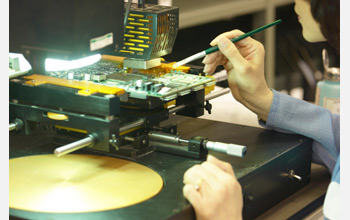 National Science Foundation - U.S. R&D companies--companies located in the United States that performed or funded research and development (R&D) domestically or in their overseas locations--employed 27.1 million workers worldwide in 2008, according to a new National Science Foundation report.
The figures are the first employment statistics from the new Business R&D and Innovation Survey (BRDIS), developed jointly by NSF and the U.S. Census Bureau. Earlier this year, this same survey yielded information for the first time about worldwide sales and monetary amounts spent on R&D by U.S.-based companies. Data from that report can be found in an NSF press release and in an InfoBrief published in May.
Saturday, July 10, 2010
A Global Language for Packaging and Sustainability
 Green Biz - More than 30 companies are testing out a packaging sustainability measurement system that one group hopes becomes a worldwide standard. The system was developed through the Consumer Goods Forum's Global Packaging Project (GPP), and includes a list of 52 indicators (and how to measure them) like weight, recycling rates, virgin content and shelf life. The basics of the system and common packaging principles are explained in the GPP's first report, "A Global Language for Packaging and Sustainability," which was developed with input from more than 80 manufacturers, retailers, trade associations and packaging industry stakeholders.
The indicators are divided into three main sections: Environmental (material waste, recycling/composting/reuse rates, recycled or renewable content), economic (total cost of packaging, packaged product wastage) and social (packaged product shelf life, product safety, responsible workplace practices).
0
comments

 Labels:
Collaboration,
Green,
Materials,
Mfg Metrics,
Standards,
Study,
Sustainability,
Tools
 Labels:
Collaboration,
Green,
Materials,
Mfg Metrics,
Standards,
Study,
Sustainability,
Tools
Measuring Innovation A New Perspective
 OECD - Measuring Innovation: A New Perspective presents new measures and new ways of looking at traditional indicators. It builds on 50 years of indicator development by OECD and goes beyond R&D to describe the broader context in which innovation occurs. It includes some experimental indicators that provide insight into new areas of policy interest. It highlights measurement gaps and proposes directions for advancing the measurement agenda.
This publication begins by describing innovation today. It looks at what is driving innovation in firms, and how the scientific and research landscape is being reconfigured by convergence, interdisciplinarity and the new geography of innovation hot spots. It presents broader measures of innovation, for example using new indicators of investment in intangible assets and trademarks.
Sunday, July 4, 2010
90% of UK organisations not registered for CRC efficiency scheme
Energy Efficiency News - Some 90% of the businesses and public sector organisations covered by the Government’s Carbon Reduction Commitment Energy Efficiency Scheme (CRC) are yet to register, according to the Environment Agency. The scheme, which came into force on April 1, requires organisations on half-hourly metered electricity to report annually on energy usage and carbon emissions. After the first registration phase of the scheme, participants will have to purchase carbon allowances to cover their emissions.
Organisations will be ranked annually by the Government in a league table of the best and worst performers and those that show least improvement will be penalised. Participants in the scheme have until September to register with the Environment Agency, and heavier users – which consume more than 6000 MWh per year or spend over £500,000 a year – should have started monitoring energy use and carbon emissions already...The Government hopes that the mandatory scheme will save organisations around £1 billion in energy costs by 2020 and reduce emissions by at least 4.4 million tonnes of CO2 a year.
Organisations will be ranked annually by the Government in a league table of the best and worst performers and those that show least improvement will be penalised. Participants in the scheme have until September to register with the Environment Agency, and heavier users – which consume more than 6000 MWh per year or spend over £500,000 a year – should have started monitoring energy use and carbon emissions already...The Government hopes that the mandatory scheme will save organisations around £1 billion in energy costs by 2020 and reduce emissions by at least 4.4 million tonnes of CO2 a year.
0
comments
Labels:
Emissions,
Energy Efficiency,
Europe,
Mfg Metrics,
Policy,
Regulations,
Standards
Labels:
Emissions,
Energy Efficiency,
Europe,
Mfg Metrics,
Policy,
Regulations,
Standards
China's Share of Advanced U.S. Manufacturing Market Soars
IndustyWeek (AFP) - Industrial challenge from Beijing is no longer confined to low-end goods says industry group.USBIC's data show that from 1997-2008 (the last year for which U.S. government data is available), China's share of advanced U.S. manufactures markets surged from 0.59% to 5.44%. This rate of expansion was more than 12 times faster than the total foreign share during this period. Moreover, Chinese products' market share in America's own industrial backyard is much higher for many individual industries. For example, in 2008 imports from Chinese-made products alone accounted for 33.2% of all of the computers Americans consumed, 22% of the broadcast and wireless communications equipment, 12.7% of the tires, 12.1% of the industrial valves, 9.9% of the motors and generators, 7.9% of the relays and industrial controls, and 6.1% of the environmental controls. Download report (PDF)
Saturday, June 26, 2010
Carbon footprinting - the next step to reducing your emissions
 Carbon Trust - This guide introduces two types of carbon footprinting that affect businesses – one that measures an organisation’s overall activities, and one that looks at the life cycle of a particular product or service.
Calculating either or both of these footprints is a useful starting point for any wider work to reduce your organisation’s carbon emissions, and will give you an initial benchmark against which to measure your progress. In this guide we explain what is included in both types of footprint, how you can measure and communicate them, and the benefits of doing so. We also set out the specific steps you need to take to calculate your footprint(s), and some of the key things to consider if you do.
Finally, we explain how the Carbon Trust can help you calculate your carbon emissions, and work with you to develop a full carbon management strategy for your organisation. Download Here
0
comments
Labels:
Energy Efficiency,
Green,
Mfg Metrics,
Standards,
Study,
Supply Chain,
Sustainability
Labels:
Energy Efficiency,
Green,
Mfg Metrics,
Standards,
Study,
Supply Chain,
Sustainability
2010 Global Manufacturing Competitiveness Index
 Deloitte - A report by Deloitte’s Global Manufacturing Industry group and the U.S. Council on Competitiveness. 2010 Global Manufacturing Competitiveness Index is based on the responses of more than 400 chief executive officers and senior manufacturing executives worldwide to a survey conducted in late 2009 and early 2010. It also draws on select interviews with key manufacturing decision makers.
The report indicates that access to talented workers capable of supporting innovation is the key factor driving global competitiveness at manufacturing companies — well ahead of ‘classic’ factors typically associated with competitive manufacturing, such as labor, materials, and energy.
Factories Grapple With How Fast to Ramp Up
 Wall Street Journal (Maher) - reports manufacturers are stuck trying to find the balance of increasing production without overextending, a costly mistake that can have repercussions. Mike Arnold, an executive VP of Timken Co. said "Everyone wants to ramp up... but nobody wants to overcapitalize." His company laid off 20% of its workforce over the course of the recession, and now companies are asking if they will be able to deliver enough goods if demand doubled. Bringing capacity online too quickly can hurt prices, yet by waiting too long leads to shortages, which put workers on overtime and forcing companies to rush to fill retailer's needs. The Journal notes in April, US manufacturers were operating at 70.1% of potential capacity, up from the low of 65.1% in June, but still below the average of 80.8%. Hat Tip: NAM
Sunday, June 20, 2010
U.S. Cars Top Imports On Quality Survey
Manufacturing.net (Manning, Associated Press) - U.S. automakers have surpassed foreign brands for the first time in a survey that measures the quality of new cars and trucks. J.D. Power and Associates said Thursday that owners of vehicles made by Detroit automakers reported fewer problems on average during the first 90 days of ownership than those built by companies based overseas. It was the first time that has happened in the 24 years the industry research group has conducted the annual quality study that is a closely watched measure of the durability and reliability of vehicles.
IndustryWeek Releases List Of Top 500 US Manufacturers
 IndustryWeek - Check out the 500 largest public manufacturing companies -- based on 2008 revenues -- in the United States via this sortable list.
Subscribe to:
Posts (Atom)


 Posts

